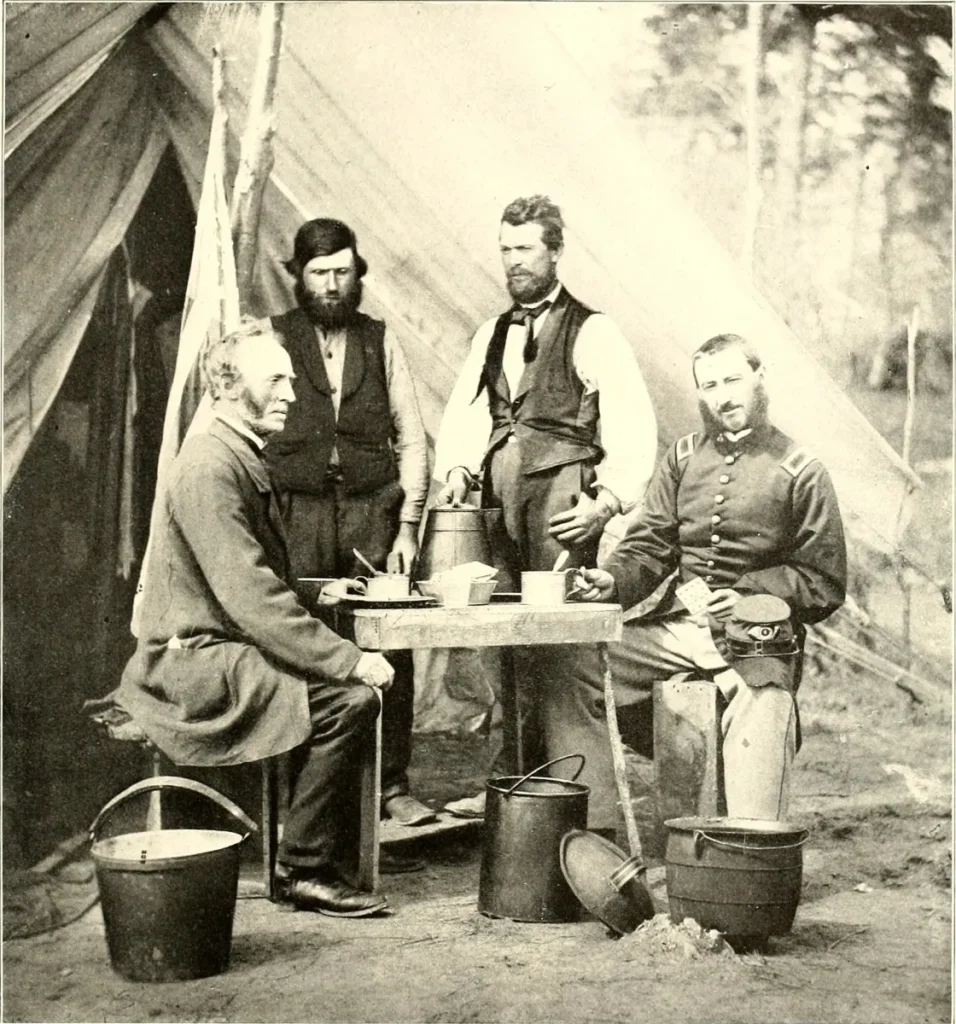
When we think about the American Civil War, it is easy to imagine it as ancient history. The war ended in 1865, before automobiles, airplanes, radio, television, or any of the technology that defines modern life. The soldiers who fought at Gettysburg, Shiloh, Vicksburg, and countless other battlefields seem to belong to an America completely removed from our own. Every once in a while, however, I come across a story that reminds me just how close that history really is.
One of the best examples is the remarkable story of Maudie Hopkins, an Arkansas woman who was recognized at the time of her death as the last publicly documented widow of a Confederate Civil War veteran. Maudie lived until 2008, more than 140 years after the Civil War ended. What makes her story even more interesting to me is that she spent the latter decades of her life in Lexa, Arkansas, and died in Helena-West Helena, an area with some of the deepest Civil War history in the state.
Her life created an almost unbelievable bridge between two periods of American history. Maudie was born nearly half a century after the Civil War ended, yet as a young woman she married a man who had actually served in the Confederate Army. She then lived long enough to see the beginning of the twenty-first century.
Growing Up in Arkansas
Maudie Acklin was born in Baxter County, Arkansas, in 1914. She grew up in a large family in the Ozarks and reached adulthood during the Great Depression, when poverty and economic uncertainty affected families throughout rural Arkansas. Jobs were scarce, money was tight, and young people often did whatever work they could find to help themselves and their families.
As a teenager, Maudie went to work for an elderly widower named William M. Cantrell. She helped him with cooking, cleaning, and other household chores. Cantrell was already well into his eighties, and Maudie was still a teenager, but the arrangement provided her with work during one of the most difficult economic periods in American history.
Living arrangements between an unmarried young woman and an unrelated older man were viewed very differently in rural Arkansas during the 1930s than they might be today. According to Maudie’s later recollections, Cantrell proposed marriage partly because it would make their living arrangement socially acceptable and provide her with some measure of security. On February 2, 1934, they were married. Maudie was 19 years old, while Cantrell was approximately 86.
The enormous difference in their ages would have made the marriage unusual under any circumstances. What made it historically remarkable was the fact that Maudie’s elderly husband had served in the Confederate Army during the Civil War.
Married to a Civil War Soldier in 1934
William Cantrell had enlisted in Confederate service when he was a teenager. During the war, he was captured by Union troops, making him one of the hundreds of thousands of young men whose lives were permanently shaped by the conflict. By the time he married Maudie in 1934, roughly seven decades had passed since his military service.
It is difficult to comprehend the amount of history represented by that marriage. Maudie was born in the twentieth century, but her husband had been a soldier in a war fought during Abraham Lincoln’s presidency. Cantrell had lived through Reconstruction, the closing of the American frontier, industrialization, World War I, and the beginning of the Great Depression before marrying a woman young enough to be his granddaughter.
Their marriage lasted approximately three years. Cantrell’s death was itself unusual. According to accounts Maudie later gave, he was riding a mule when a hog frightened the animal, causing Cantrell to be thrown. The elderly veteran died following the accident, leaving Maudie a widow while she was still a young woman.
Maudie eventually remarried and continued with her life. She would marry four times altogether, raise a family, and eventually settle in Lexa during the 1960s. For decades, the extraordinary historical significance of her first marriage attracted little attention.
A Story Maudie Didn’t Talk About Much
Maudie apparently did not spend her life telling everyone that she had once been married to a Confederate veteran. In fact, she was reportedly reluctant to discuss it because she was embarrassed by the enormous age difference between herself and Cantrell. What later became a fascinating historical connection had simply been part of a difficult period in her young life.
That helps explain why another woman was long believed to be America’s final surviving Confederate widow.
Alberta Martin of Alabama had married Confederate veteran William Jasper Martin in 1927. She was 21 years old, while he was 81. Their marriage became widely known, and Alberta eventually gained national attention as the presumed last surviving widow of a Confederate soldier. When she died in 2004 at the age of 97, newspapers around the country reported that one of America’s final living connections to the Civil War had disappeared.
There was only one problem. Maudie Hopkins was still living in Arkansas.
After Martin’s death brought national attention to the question of surviving Civil War widows, researchers examined Maudie’s story more carefully. Historian Martha Boltz helped verify the marriage through Confederate military records and the couple’s 1934 marriage documentation. The evidence confirmed that William Cantrell had indeed served during the Civil War and that Maudie had legally married him decades later.
The last publicly documented Confederate widow had therefore not died in Alabama in 2004. She was quietly living in eastern Arkansas.
The Last Union Widow
There was a similar story on the Union side of the war. Gertrude Grubb Janeway of Tennessee became recognized as the last surviving widow of a Union Civil War veteran. In 1927, when Gertrude was about 18 years old, she married John Janeway, an 81-year-old veteran who had served in the Union Army.
John Janeway died in 1937, but Gertrude never remarried. Because she was legally the widow of a Union veteran, she continued receiving a small federal pension connected to his Civil War service. She was still receiving that pension when she died in January 2003 at the age of 93.
That fact alone demonstrates how surprisingly close the Civil War remained to modern America. More than a century after Appomattox, the United States government was still paying a Civil War-related pension to the widow of a Union soldier.
Gertrude Janeway died in 2003. Alberta Martin died the following year. Maudie Hopkins remained alive for another four years.
Maudie’s Final Years in the Arkansas Delta
Maudie’s connection to eastern Arkansas makes her story especially interesting because of the history surrounding Helena and Phillips County. Helena was occupied by Union forces in 1862 and became an important Federal base on the Mississippi River. The Battle of Helena was fought on July 4, 1863, and the city remained under Union control for the rest of the war.
The Civil War is still visible throughout Helena today. Patrick Cleburne, who lived in Helena before becoming one of the Confederacy’s best-known generals, is buried at Maple Hill Cemetery. Confederate generals Thomas C. Hindman and James C. Tappan are buried there as well. The Helena Confederate Cemetery contains the remains of numerous Confederate soldiers, including men connected with the Battle of Helena.
Against that historical backdrop, it seems remarkable that one of America’s final direct marital connections to a Confederate soldier eventually made her home just outside Helena.
Maudie lived quietly in Lexa for decades. She was not a Civil War historian, reenactor, or public figure who had built her identity around her first husband’s military service. She was simply an Arkansas woman whose unusual first marriage happened to connect her directly to one of the defining events in American history.
When Maudie Hopkins died on August 17, 2008, she was 93 years old. She died at a hospital in Helena-West Helena, bringing to an end a life that had indirectly connected Civil War-era Arkansas with the twenty-first century.
What Does “Last Civil War Widow” Really Mean?
There is one qualification that is important when telling Maudie’s story. She is most accurately described as the last publicly documented or publicly confirmed widow of a Confederate Civil War veteran. At the time her story received national attention, there were reports that a few other elderly women might also have married Confederate veterans but did not want their identities made public.
Without documentation available for examination, those claims could not be established in the same way as Maudie’s. Her marriage to William Cantrell, on the other hand, was supported by marriage records and documentation of Cantrell’s Confederate military service. For that reason, historians and contemporary news organizations generally used the more careful description of Maudie as the last publicly confirmed Confederate widow.
That distinction does not diminish the significance of her story. If anything, it illustrates how unusual these marriages were and how easily their history could have disappeared if families had not preserved the records.
Three Centuries Connected by One Marriage
The most fascinating part of Maudie’s story is not really about the Confederacy or the Union. It is about time and the strange ways generations can overlap.
William Cantrell was born in the nineteenth century and fought in the Civil War as a young man. Nearly seventy years later, during the Great Depression, he married Maudie, a woman born in the twentieth century. Maudie then survived into the twenty-first century, living until 2008.
Their marriage created a direct human connection spanning three centuries.
When Maudie was a young woman, she could sit across a table from someone who remembered the Civil War as part of his own life. When Maudie was an elderly woman, people could sit across a table from her and hear about the man she had married who had actually served in that war.
There were only two people separating those conversations.
Stories like this are useful reminders that history does not occur in the neat compartments we create for it in textbooks. Generations overlap. People live long lives. A teenager survives a war, grows old, and marries someone born decades later. That person then carries the connection forward for another lifetime.
The Civil War Was Closer Than We Think
The Civil War ended in 1865. Gertrude Janeway, the last recognized Union widow, lived until 2003. Alberta Martin, once believed to be the final Confederate widow, lived until 2004. Maudie Hopkins lived until 2008.
By the time Maudie died, Americans were using smartphones, communicating through social media, watching high-definition television, and carrying devices in their pockets with more computing power than anyone could have imagined during her childhood. Yet this same woman had once been married to a man who had served as a Confederate soldier during the presidency of Abraham Lincoln.
That is what makes her story worth remembering. It reduces an enormous span of American history to something understandable in human terms. The Civil War is not merely a collection of old photographs, battlefield monuments, generals, and dates. Its generation remained connected to later generations for much longer than most of us realize.
There is also something appropriate about the final chapter of Maudie’s life taking place in the Arkansas Delta. She spent her later years near Helena, surrounded by a landscape where reminders of the Civil War remain visible more than a century and a half later.
When Maudie Hopkins died in Helena-West Helena in 2008, one of the last publicly documented marital links to a Confederate Civil War soldier disappeared with her. William Cantrell had lived through the Civil War. Maudie had known and married him. People alive today knew Maudie.
When you look at history that way, 1865 doesn’t seem nearly as far away as it once did.

Leave a Reply
You must be logged in to post a comment.