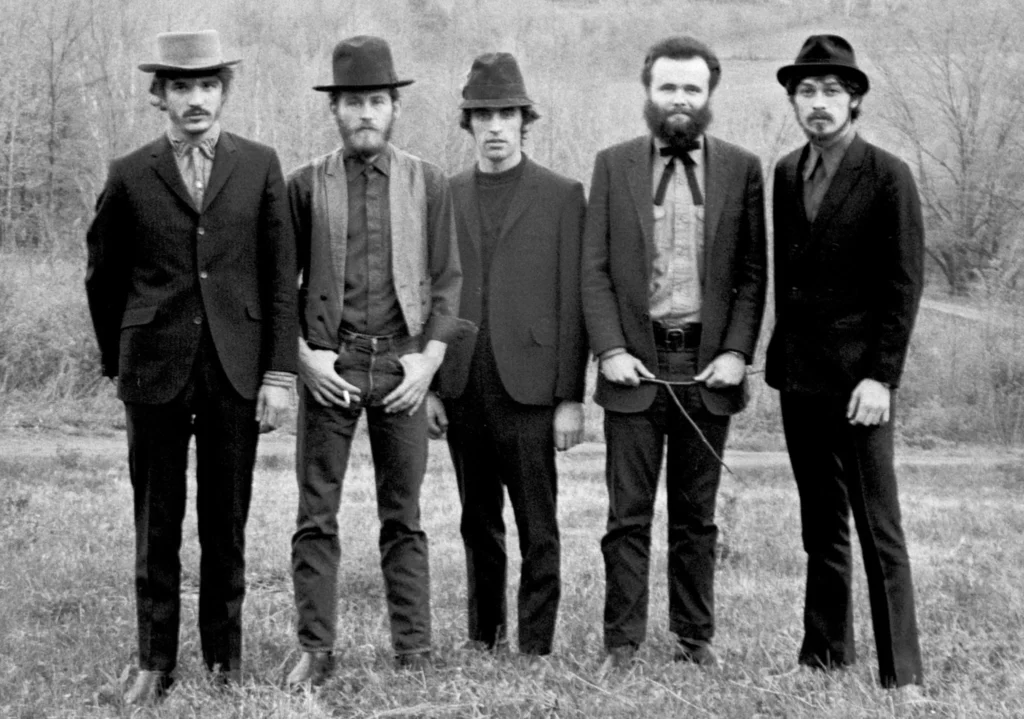
When people tell the story of Levon Helm, they usually begin in Turkey Scratch, Arkansas, and eventually move north to Woodstock, New York. Somewhere in between come Ronnie Hawkins, Bob Dylan, Music from Big Pink, The Last Waltz, and The Band, one of the most influential groups in the history of American rock music.
That is all part of the story, but it skips over something important.
Before Woodstock, before Bob Dylan, before The Band, and before anybody outside the Arkansas Delta knew the name Levon Helm, there was Helena.
Helena and the surrounding Phillips County music scene helped shape the young Levon Helm. It was where he heard some of the blues musicians who influenced him, where he spent time around KFFA and King Biscuit Time, where he played as a teenager, and, most importantly, where an encounter at the Delta Supper Club in West Helena helped launch the professional career that eventually carried him around the world.
In many ways, the road to The Band began in the Arkansas Delta.
Growing Up Just Outside Helena
Levon Helm was born Mark Lavon Helm on May 26, 1940, in Elaine, Arkansas, and grew up in the tiny Phillips County community of Turkey Scratch, near Marvell. His parents, Jasper and Nell Helm, were cotton farmers, and Levon’s childhood was firmly rooted in the agricultural world of the Arkansas Delta.
Music, however, was everywhere.
The Helm family enjoyed music, and Levon was exposed to country, gospel, blues, rhythm and blues, and the traveling musical shows that passed through the region. Radio brought still more music into his world. The Grand Ole Opry could be heard from Nashville, while stations broadcasting blues and rhythm and blues introduced rural listeners to sounds that were very different from mainstream country music.
But some of the most important music wasn’t coming from hundreds of miles away.
It was coming from Helena.
KFFA had begun broadcasting King Biscuit Time in 1941, when Helm was still a baby. By the time he was old enough to become seriously interested in music, Sonny Boy Williamson II, Robert Lockwood Jr., and other Delta blues musicians associated with the program were already part of the musical culture surrounding Helena.
For a boy growing up in Phillips County who wanted to become a musician, that mattered enormously.
Listening to King Biscuit Time
One of Helm’s most important early influences was Sonny Boy Williamson II, the legendary harmonica player whose performances on KFFA helped make him a celebrity throughout the Delta.
Helm didn’t simply hear blues as an abstract musical style on records. He grew up in the same cultural environment that produced it. Helena was the regional center of that world, and King Biscuit Time provided a daily connection to musicians who were actually living and performing nearby.
One musician in particular caught Helm’s attention: drummer James “Peck” Curtis, who played with Sonny Boy Williamson.
Helm later recalled watching Curtis closely and studying the way he played. Those experiences helped influence the rhythmic style Helm would eventually develop himself. That is an important connection because Levon Helm became one of the most distinctive drummers in rock music, yet some of the foundations of that style were learned by watching Black blues musicians in the Arkansas Delta. The Arkansas Heritage documentation for Helm’s boyhood home specifically identifies Helena as the cultural center of the surrounding Delta blues environment and notes the importance of musicians such as Sonny Boy Williamson and Robert Lockwood Jr. (DAH Site)
This is one reason I think Helena deserves more credit when the story of Levon Helm is told. His musical education didn’t begin when he reached Canada or Woodstock. It began while he was still a kid in Phillips County, absorbing country music, gospel, rhythm and blues, and the blues that surrounded him.
Helena was one of the places where all of those sounds came together.
From Marvell to the Clubs Around Helena
By the time Helm reached high school, listening was no longer enough. He wanted to play.
He formed an early group called the Jungle Bush Beaters while attending school in Marvell and began performing at local events. As he became more experienced, the teenager started playing in clubs and other venues around Helena.
That brought him into contact with another Arkansas musician who would change the direction of his life.
Ronnie Hawkins was born in Huntsville, Arkansas, and grew up in Fayetteville. By the late 1950s, Hawkins was trying to establish himself as a professional rock-and-roll performer. He eventually came to Helena, where he assembled musicians and developed a band called the Hawks. The Encyclopedia of Arkansas confirms that Hawkins moved to Helena after his military service and put together a touring band there that included Helm on drums. (Encyclopedia of Arkansas)
The pivotal meeting between Hawkins and Helm took place at the Delta Supper Club in West Helena.
Helm was only about seventeen years old.
Hawkins was performing there without a drummer, and the piano player knew the young Levon Helm and suggested that he sit in with the band. Helm did, and Hawkins liked what he heard. The encounter eventually resulted in an invitation for Helm to join the Hawks.
It is difficult to overstate the importance of that night.
Helm was still a high-school student from rural Phillips County. Hawkins was trying to build a professional touring band. When Helm finished high school in Marvell, he joined Hawkins and went on the road. (Encyclopedia of Arkansas)
The professional career of Levon Helm had begun.
And it began in West Helena.
Helena Was a Serious Music Town
The story also tells us something about Helena during the 1950s that can be easy to forget today.
Helena and West Helena had a legitimate live-music scene.
The blues tradition was already deeply established through KFFA and King Biscuit Time, but blues was only part of what was happening. Country, rhythm and blues, early rock and roll, and rockabilly were colliding throughout the Mid-South. Memphis was becoming the center of the Sun Records revolution, and musicians traveled constantly between towns looking for places to perform.
Helena was positioned directly in the middle of that musical geography.
One of the important venues was the Rockwood Club, which operated near the Mississippi River south of Helena. The club became associated with Ronnie Hawkins and other performers during the late 1950s. Historical accounts document appearances by artists including Roy Orbison, Jerry Lee Lewis, and guitarist Roy Buchanan. (Encyclopedia of Arkansas)
Consider what that meant for a teenage musician from Phillips County.
Within the region surrounding his home, Helm could hear the Delta blues associated with Sonny Boy Williamson and Robert Lockwood Jr., encounter emerging rock-and-roll musicians, hear country music, watch traveling shows, and then play clubs where professional musicians were working.
Helena wasn’t simply somewhere Levon Helm happened to visit.
It was part of his musical classroom.
Helena Leads to Ronnie Hawkins—and Ronnie Hawkins Leads to Canada
Ronnie Hawkins recognized that the United States was becoming increasingly crowded with young rock-and-roll performers. On the advice of another musician with deep Helena connections—Harold Jenkins, better known as Conway Twitty—Hawkins began looking north toward Canada, where there was a strong market for American rock and roll. The Encyclopedia of Arkansas records that Hawkins and his band headed for Canada in 1958 following Twitty’s suggestion. (Encyclopedia of Arkansas)
Levon Helm went with him.
The Hawks became enormously popular on the Canadian club circuit. Hawkins was a wild and charismatic frontman, and the band developed into an exceptionally tight live unit through constant touring.
As musicians came and went, Hawkins and Helm recruited new players.
Eventually the lineup included four young Canadians: Robbie Robertson, Rick Danko, Richard Manuel, and Garth Hudson.
Those names should sound familiar.
Together with Levon Helm, those musicians eventually left Ronnie Hawkins and performed as Levon and the Hawks. They later became associated with Bob Dylan, backing him during one of the most controversial and important transitions of his career as he moved from acoustic folk music toward amplified rock.
Eventually, Helm, Robertson, Danko, Manuel, and Hudson became simply The Band. (AP News)
That makes the musical family tree fascinating.
The Band is generally associated with Woodstock, New York, and four of its five members were Canadian. Yet the group’s earliest roots lead back to Ronnie Hawkins, and Hawkins’s relationship with Levon Helm was forged in Helena.
Pull on that thread long enough and you end up back at the Delta Supper Club.
Did Levon Bring Famous Musicians Back to Helena?
This is the part of the story I wanted to investigate carefully because there are a number of Helena music stories that have been repeated over the years.
There is abundant documentation that Levon Helm played around Helena, knew musicians there, and remained deeply connected to his Arkansas Delta roots. The University of Arkansas’s Levon Helm Oral History Project even preserves an image of Helm playing with C. W. Gatlin at Gist Music Company in Helena, another reminder that his connection to the city’s musical community was personal and practical rather than simply geographical. (Pryor Center)
There is also good evidence that Helena attracted important musicians during the period when Helm was coming of age. Ronnie Hawkins worked there, and artists such as Roy Orbison, Jerry Lee Lewis, and Roy Buchanan appeared in the local club scene. (Encyclopedia of Arkansas)
What I have not found, however, is strong documentation supporting the broader idea that after Levon became famous with The Band he regularly brought major artists such as Bob Dylan, Eric Clapton, Van Morrison, or his Band bandmates back to Helena for performances.
That distinction is important.
Helm certainly became connected to an astonishing collection of musicians during his career. The Last Waltz alone brought The Band together with Bob Dylan, Muddy Waters, Van Morrison, Neil Young, Joni Mitchell, Ronnie Hawkins, Eric Clapton, and others. Later in life, Helm’s famous Midnight Rambles at his home and studio in Woodstock attracted another remarkable collection of performers.
But those events occurred elsewhere.
If photographs, newspaper advertisements, posters, club records, or personal recollections document some of those musicians coming to Helena specifically with Levon, that would be an important addition to the story. The University of Arkansas’s oral-history project may ultimately be one of the best places to continue looking because it collects recollections from people who actually knew and played with Helm. (Pryor Center)
For now, I think it is better to separate what we can document from what we might remember hearing.
The Famous Musicians Were Already Coming Through Helena
There is another way to look at the question, though.
Levon Helm didn’t necessarily have to bring famous musicians to Helena. Helena was already attracting musicians before Levon became famous himself.
That is an important part of the story.
Sonny Boy Williamson II and Robert Lockwood Jr. were associated with KFFA. Ronnie Hawkins developed the Hawks there. Roy Orbison and Jerry Lee Lewis performed in the Helena-area club scene. Conway Twitty grew up in Helena before achieving national fame. Helm was growing up only a short distance away in Turkey Scratch and Marvell, absorbing all of it. (Encyclopedia of Arkansas)
Helena was not some isolated little town that Levon Helm escaped on his way to becoming a musician.
Helena was one of the places that helped make him a musician.
That is a much more interesting story.
You Can Hear the Delta in Levon Helm
Years later, when Levon Helm sang songs such as “The Weight,” “Up on Cripple Creek,” or “The Night They Drove Old Dixie Down,” there was something in his voice that didn’t sound like anybody else in The Band.
You could hear Arkansas.
The same thing was true of his drumming. Helm wasn’t simply a rock drummer keeping time behind a band. His playing contained elements of blues, rhythm and blues, country, gospel, and the loose but powerful rhythmic traditions he had absorbed growing up in the Delta.
That musical mixture became one of The Band’s defining characteristics.
Four of the five members were Canadian, yet The Band produced some of the most distinctly American-sounding music of its generation. Part of the reason was that Levon Helm carried the musical culture of the South into the group.
He carried Turkey Scratch.
He carried Marvell.
And he carried Helena.
From King Biscuit Time to The Last Waltz
There is a remarkable line connecting the different parts of Levon Helm’s life.
As a boy in Phillips County, he listened to and watched musicians associated with King Biscuit Time. He studied the drumming of James “Peck” Curtis. As a teenager, he began playing music around Helena. At seventeen, he sat in with Ronnie Hawkins at the Delta Supper Club in West Helena.
That opportunity led him onto the road.
The road led to Canada.
Canada led to Robbie Robertson, Rick Danko, Richard Manuel, and Garth Hudson.
Those musicians eventually connected with Bob Dylan.
And from that came The Band.
By the time Martin Scorsese filmed The Last Waltz in 1976, Levon Helm was sharing a stage with some of the most important musicians in the world. (Pitchfork)
It is quite a journey for a cotton farmer’s son from Turkey Scratch.
But the beginning of that journey wasn’t Woodstock, Toronto, or New York City.
A very important part of it happened right here in Phillips County.
Helena Helped Make Levon Helm
I think Helena sometimes underestimates its place in American music history.
We remember King Biscuit Time, and rightfully so. Sonny Boy Williamson and Robert Lockwood Jr. gave Helena an undeniable place in blues history. Conway Twitty provides another remarkable connection between Helena and American popular music.
Levon Helm belongs in that story too.
He wasn’t born inside the Helena city limits, and it would be inaccurate to claim him exclusively as a Helena musician. Turkey Scratch, Elaine, and Marvell are essential parts of his story.
But so is Helena.
Helena gave him access to the blues. KFFA gave him music to study. The clubs around Helena gave him places to play. The musicians working there gave him people to learn from. And at the Delta Supper Club in West Helena, a teenage Levon Helm encountered Ronnie Hawkins at exactly the right moment.
That night helped change his life.
Years later, Levon Helm would play with Bob Dylan, become the drummer and one of the great voices of The Band, perform in The Last Waltz, enter the Rock and Roll Hall of Fame, win Grammy Awards, act in major motion pictures, and become recognized as one of the defining figures in American roots music.
But before all of that, he was a kid from the Arkansas Delta watching musicians, listening to the radio, learning rhythms, and trying to get a chance to play.
Helena gave him one.
And Levon Helm took it all the way to Woodstock.

Leave a Reply
You must be logged in to post a comment.