There are towns whose history can be told by listing a few important dates, and then there are places where history seems to be everywhere you look. Helena, Arkansas, is one of those places.
Sitting between the Mississippi River and the hills of Crowley’s Ridge, Helena occupies one of the most unusual locations in the Arkansas Delta. The river brought opportunity, wealth, people, music, and commerce to the town, but it also brought floods and hardship. The surrounding Delta produced cotton and other crops that helped make Helena one of the important commercial centers of eastern Arkansas. The Civil War brought thousands of soldiers to its streets and hills. Later generations brought railroads, factories, radio, blues music, and some remarkable people whose influence reached far beyond the Delta.
Mark Twain walked through Helena and wrote about it. Patrick Cleburne lived here before becoming one of the most famous Confederate generals of the Civil War. Helen Keller’s maternal grandfather made Helena his home, and her grandparents were married here. Conway Twitty grew up here. Sonny Boy Williamson and Robert Lockwood Jr. performed here, and King Biscuit Time carried the sound of the Delta across the airwaves.
The history of Helena is really the history of the Mississippi Delta in miniature. It is a story of opportunity and loss, tremendous wealth and terrible poverty, slavery and freedom, war and reconstruction, floods and levees, agriculture and industry, racial divisions and cultural exchange, economic booms and painful decline.
Through all of it, Helena has survived.
A Town Built Between the Hills and the River
Long before Helena existed, Native peoples occupied and traveled through the region surrounding the lower Mississippi River. The river and its tributaries provided transportation, food, fertile soil, and trade routes, while the unusual high ground of Crowley’s Ridge offered something particularly valuable in a landscape frequently threatened by flooding.
European and American settlement gradually expanded into the region, particularly after the Louisiana Purchase brought Arkansas under United States control. Arkansas became a territory in 1819, and settlers increasingly moved into the fertile eastern lowlands during the following decades.
Helena developed near the Mississippi River at the southern end of Crowley’s Ridge. That combination of high ground, fertile agricultural land, and river access would determine much of the city’s future.
The community was incorporated in 1833, three years before Arkansas became a state. From the beginning, Helena’s location gave it advantages that many other communities in eastern Arkansas did not possess. The Mississippi was the great transportation system of the region, and Helena became a natural point where the agricultural products of the surrounding countryside could be collected and shipped to distant markets.
As cotton production expanded across the Delta, Helena grew with it.
Cotton, Slavery, and the Rise of Helena
It is impossible to tell the early history of Helena honestly without discussing both cotton and slavery. The two were inseparable in the antebellum Delta.
The rich alluvial soil surrounding Helena was exceptionally well suited for cotton. Plantations expanded across Phillips County and neighboring areas, and enslaved African Americans supplied much of the labor that made large-scale cotton production possible. Cotton harvested in the countryside was transported to Helena, where merchants, warehouses, banks, and riverboats connected the local agricultural economy with markets elsewhere in the United States and overseas.
As the cotton economy grew, so did Helena.
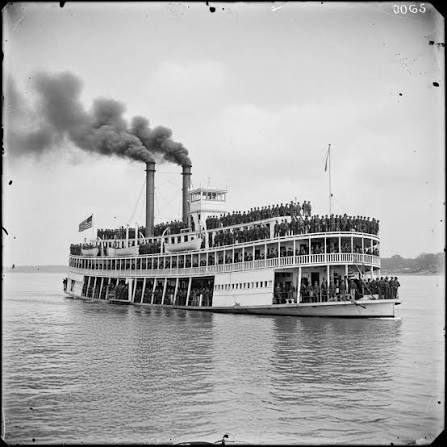
Steamboats moving between New Orleans, Memphis, St. Louis, and other river cities regularly passed the Helena waterfront. They carried cotton away from the Delta and returned with manufactured goods, passengers, mail, machinery, and news from the outside world. Hotels, stores, saloons, warehouses, professional offices, and other businesses developed to serve the growing population and river traffic.
A number of families and individuals who would later become important in Arkansas history established themselves in Helena during these years. Among them was Patrick Ronayne Cleburne, an Irish immigrant who arrived in Helena around 1850. Cleburne worked as a pharmacist and later became a lawyer and newspaper owner before the Civil War transformed his life.
Another prominent resident was Charles William Adams, a businessman, lawyer, judge, planter, and political figure who arrived in Helena in the 1830s. Adams would later become a Confederate officer. His daughter Kate eventually became the mother of Helen Keller, giving Keller a fascinating family connection to Helena.
By 1860, Helena had become an important commercial town in one of Arkansas’s wealthiest agricultural regions.
Then came the Civil War.
The Civil War Changes Helena
Arkansas initially resisted secession, but after the firing on Fort Sumter and President Abraham Lincoln’s call for troops, the political situation changed rapidly. Arkansas left the Union in 1861, and many men from Helena and Phillips County entered Confederate service.
Several would rise to high command.
Patrick Cleburne became a Confederate major general and one of the best-known commanders in the Army of Tennessee. Thomas C. Hindman, James Camp Tappan, Daniel Govan, and Lucius Polk were among the other prominent Confederate officers associated with Helena or Phillips County.
The city itself, however, would not remain in Confederate hands.
In July 1862, Union troops under Major General Samuel Ryan Curtis reached Helena after marching across Arkansas. The Confederates had no force capable of stopping them, and Federal troops occupied the city.
Helena’s strategic value was obvious. It sat directly on the Mississippi River and provided the Union with a base deep inside Confederate Arkansas. From Helena, Federal troops could launch expeditions into the surrounding Delta, threaten Confederate supply networks, support operations along the Mississippi, and eventually participate in campaigns connected with the capture of Vicksburg and Little Rock.
The occupation changed the city dramatically.
Thousands of formerly enslaved people came into Helena seeking protection behind Union lines. These refugees, commonly called “contrabands” in the terminology of the period, created a humanitarian crisis but also fundamentally changed the social structure of the region. Helena became an important center for emancipation, refugee camps, missionary activity, education, and eventually the recruitment of African American soldiers into the Union Army.
For many people in Phillips County, the Civil War was no longer simply armies fighting somewhere else. It had arrived at their front doors.
The Battle of Helena
The defining military event in Helena occurred before daylight on July 4, 1863.
Confederate Lieutenant General Theophilus Holmes led a large force toward the city in an attempt to capture the important Union stronghold. Helena was defended by approximately 4,000 Federal troops under Major General Benjamin Prentiss, supported by artillery positions constructed on the hills surrounding town and by Union naval forces on the Mississippi.
The Confederate attack struck several portions of the defensive line. Fighting became particularly intense around the fortified positions overlooking the city. Confederate troops managed to capture one important position, but coordination problems, difficult terrain, artillery fire, and determined Union resistance prevented them from turning the breakthrough into a victory.
The attack failed.
The National Park Service estimates Confederate casualties at approximately 1,636, compared with 239 Union casualties. Helena remained in Federal hands and continued serving as an important Union base. The defeat was particularly damaging because it occurred on the same day that Vicksburg surrendered to Ulysses S. Grant, a development that helped place the Mississippi River under Union control. (National Park Service)
Today, the hills surrounding Helena still help tell that story. The battlefield, surviving earthworks, historic sites, and Maple Hill Cemetery, where several prominent Confederate figures are buried, connect modern Helena with the events of 1863.
Rebuilding After the War
The end of the Civil War did not mean an immediate return to prosperity. Helena and the surrounding Delta had been transformed economically and socially. Slavery was gone, plantations had been disrupted, families had been divided, and the political structure of Arkansas was undergoing Reconstruction.
Agriculture nevertheless remained the foundation of the regional economy. Cotton continued to dominate the Delta, although the labor system shifted toward tenant farming and sharecropping. For many Black and white agricultural workers, the new system offered little economic security, and poverty remained widespread despite the enormous agricultural productivity of the region.
Helena gradually recovered its commercial importance. River traffic continued, businesses returned, and railroads eventually strengthened the city’s connections with outside markets.
The Mississippi, however, remained both Helena’s greatest economic asset and one of its greatest threats.
A major 1867 flood destroyed many businesses along Water Street, encouraging the community to begin making long-term investments in levees and flood protection. Flooding would remain a recurring part of Helena’s history well into the twentieth century. (Encyclopedia of Arkansas)
Mark Twain Comes to Town
One of the best descriptions of nineteenth-century Helena came from a man who knew the Mississippi River better than almost anyone.
Mark Twain had traveled past Helena years earlier as the young steamboat pilot Samuel Clemens. When he returned to the Mississippi in 1882, he stopped at Helena while gathering material that would eventually appear in Life on the Mississippi.
Twain had approximately two hours to explore the city while his steamboat unloaded freight. The town was recovering from flooding, and he described muddy streets, elevated wooden sidewalks, water marks on buildings, and other evidence of the Mississippi’s recent visit.
Despite those conditions, Twain was impressed with the town’s location, writing that Helena occupied “one of the prettiest situations on the Mississippi.”
He also described a thriving commercial community. Helena was handling tens of thousands of bales of cotton annually, along with grain, lumber, and other commodities. Manufacturing included foundries, oil mills, machine shops, and wagon factories, while railroads increasingly connected Helena with markets beyond the river.
Twain’s account allows us to see Helena during the height of its river-port era: a busy Delta town where agriculture, manufacturing, railroads, and steamboats all came together.
Helena Enters the Twentieth Century
By the early twentieth century, Helena had developed into one of the most important communities in eastern Arkansas. Cotton remained central to the economy, and Cherry Street became the commercial heart of the city. Banks, stores, professional offices, theaters, restaurants, hotels, and other businesses served people from throughout the surrounding Delta.
The city’s location continued to shape everyday life. Helena was squeezed between Crowley’s Ridge and the Mississippi River, giving it a distinctive appearance unlike almost any other town in the Arkansas Delta. The same geography that made Helena beautiful also limited its ability to expand.
That eventually contributed to the development of West Helena on the flatter land to the west.
The two communities grew side by side for decades. Helena remained the historic river town and commercial center, while West Helena provided room for residential and industrial development.
Meanwhile, the Mississippi continued to remind everyone who really controlled the Delta.
The Great Mississippi Flood of 1927 devastated huge portions of eastern Arkansas and the Mississippi Valley. Helena and Phillips County were among the communities affected by the disaster, which transformed flood-control policy throughout the region. Another major flood followed in 1937. (Encyclopedia of Arkansas)
Levees eventually became stronger, and modern flood-control systems greatly reduced the threat to Helena itself. Even so, anyone standing on the levee today can understand why generations of people living there maintained such respect for the river on the other side.
Helena Finds Its Sound
If cotton and the Mississippi defined nineteenth-century Helena, music helped define Helena in the twentieth century.
The surrounding Arkansas and Mississippi Delta had developed one of America’s most important musical traditions: the blues. African American musicians moved throughout the region, performing at juke joints, street corners, house parties, clubs, and other gatherings. Helena’s location made it a natural meeting place for musicians from both sides of the Mississippi.
Then radio changed everything.
In 1941, Helena radio station KFFA went on the air. Blues musicians Sonny Boy Williamson II and Robert Lockwood Jr. approached the station about performing live. With sponsorship from Interstate Grocery Company’s King Biscuit Flour, the program King Biscuit Time made its debut on November 21, 1941.
What happened in that Helena radio studio became part of American music history.
King Biscuit Time gave Delta blues musicians regular access to radio at a time when opportunities for Black performers were severely limited. The signal traveled throughout the Arkansas and Mississippi Delta, carrying blues into homes, farms, stores, workshops, and fields. Musicians including Pinetop Perkins, Robert Nighthawk, James Cotton, and others became associated with the program, while young listeners throughout the region absorbed the sounds coming from Helena.
The program became one of the longest-running radio broadcasts in American history and received a Peabody Award. Its influence extended far beyond Arkansas because the Delta blues helped shape rhythm and blues, rock and roll, and much of the popular music that followed. (Encyclopedia of Arkansas)
For a town that had once shipped cotton to the world, Helena was now exporting something else.
It was exporting music.
The People Who Put Helena on the Map
Helena’s history is remarkable not only because of the events that occurred there but also because of the people connected with the community.
Patrick Cleburne lived in Helena before becoming a Confederate general. Mark Twain walked its streets and wrote about the town. Helen Keller’s maternal family had deep roots there. Blues musicians such as Sonny Boy Williamson II and Robert Lockwood Jr. made Helena an important location in the development of American music.
Conway Twitty, born Harold Lloyd Jenkins in Mississippi, grew up in Helena and began developing his musical talents there before becoming one of the biggest stars in country music. Levon Helm, who grew up nearby at Turkey Scratch, absorbed the musical culture surrounding Helena before eventually becoming drummer and vocalist for The Band.
Helena also produced prominent athletes, politicians, judges, religious leaders, writers, and entertainers. The remarkable number of influential people associated with the community is partly explained by geography. Helena sat at a crossroads between the Mississippi River, the Arkansas Delta, the Mississippi Delta, Memphis, and the wider South.
People came through Helena, and ideas came with them.
Hard Times and a Changing Delta
The second half of the twentieth century brought difficult changes to Helena and the surrounding Delta. Agriculture became increasingly mechanized, reducing the number of workers required to plant and harvest crops. Cotton lost some of its dominance as farmers diversified into soybeans, rice, corn, and other commodities. The Encyclopedia of Arkansas notes that soybeans increasingly replaced cotton after World War II as agricultural technology and markets changed. (Encyclopedia of Arkansas)
At the same time, thousands of Delta residents left rural communities for Memphis, Chicago, Detroit, St. Louis, and other cities in search of employment and opportunity. Businesses followed population, and many once-busy Delta downtowns began losing stores and employers.
Helena was hit particularly hard by those trends.
The river commerce that had once filled the waterfront had changed dramatically. Modern barges continued moving enormous quantities of freight on the Mississippi, but they did not require the hotels, restaurants, merchants, warehouses, and armies of workers associated with the old steamboat economy. Highways bypassed traditional downtowns, retail patterns changed, and industrial employers came and went.
Helena and West Helena increasingly faced the same problems confronting communities throughout the Mississippi Delta: population loss, poverty, declining retail activity, aging infrastructure, and fewer economic opportunities.
Those challenges are part of Helena’s history too. A community’s story shouldn’t end when the prosperous years end.
Helena and West Helena Become One City
For most of the twentieth century, Helena and West Helena existed as separate municipalities despite sitting directly beside one another. Their histories and economies were closely intertwined, and generations of residents moved between the two communities every day.
After years of discussion, voters approved consolidation, and in 2006 the two cities officially became Helena-West Helena. (Encyclopedia of Arkansas)
The name changed, but the historic identity of Helena remained.
Cherry Street still runs through the old commercial district. The levee still separates downtown from the Mississippi. Maple Hill Cemetery still overlooks the city from Crowley’s Ridge. Civil War earthworks remain in the surrounding hills. Historic homes and churches continue to tell pieces of the community’s story.
And the blues is still here.
The King Biscuit Blues Festival, which began in 1986, grew from a small event into an internationally known celebration of Delta blues. The Delta Cultural Center preserves the history of the Arkansas Delta and the musical traditions that developed there, while King Biscuit Time remains one of Helena’s most important contributions to American culture. (Encyclopedia of Arkansas)
Helena’s Story Is Still Here
I think one of the easiest mistakes to make with Helena is to judge the town entirely by what we see today. If you drive down an old street and see an empty storefront, it is easy to see only an empty building. If you walk along the levee, it is easy to see only a quiet riverfront. If you pass an old house or cemetery, it is easy to forget the generations of people connected to those places.
Helena requires a little imagination.
You have to picture steamboats lined along the Mississippi waterfront and bales of cotton stacked for shipment. You have to imagine Union soldiers occupying the hills while thousands of formerly enslaved people entered the city seeking freedom. You have to picture Confederate troops moving toward those same hills before sunrise on July 4, 1863.
You have to imagine Mark Twain stepping off a riverboat and walking through town in 1882.
You have to imagine Cherry Street when the sidewalks were crowded and the stores were busy. You have to picture families gathering around radios at lunchtime in the 1940s as Sonny Boy Williamson’s harmonica came crackling through the speaker on King Biscuit Time. Somewhere out in the Delta, young musicians were listening and learning.
When you begin looking at Helena that way, the town changes.
The old buildings become evidence. The hills become battlefields. The levee becomes part of a centuries-long struggle with the Mississippi. The cemeteries become collections of individual stories. The old radio broadcasts become part of the foundation of American popular music.
That is what makes Helena special.
It has never been a large city, but size and historical importance are not the same thing. Helena occupied a strategic location on America’s greatest river, stood near the center of one of the country’s most productive agricultural regions, played an important role in the Civil War, became a significant cotton and transportation center, and helped introduce Delta blues to audiences far beyond Arkansas.
The town has experienced tremendous prosperity and equally difficult periods of decline. It has survived wars, floods, economic depressions, agricultural transformations, racial conflict, population loss, and enormous changes in transportation and commerce.
Yet Helena is still here.
For those of us who grew up around this part of the Arkansas Delta, that history isn’t something confined to a museum or history book. It is underneath our feet. It is in the old houses, churches, cemeteries, storefronts, levees, hills, railroad lines, and country roads we have passed a thousand times without thinking about them.
Sometimes all you have to do is stop and ask what happened there.
In Helena, Arkansas, the answer is usually more interesting than you expected.

Leave a Reply
You must be logged in to post a comment.